

- P0/1. Columbella rustica can be collected in thanatocenoses along beaches, by sight under water, and by touch in waist-deep water
- P0/2. The dimensions of the Columbella rustica vary depending on the places of collect
- P0/3. The state of preservation varies widely according to the mode of collection (live or dead) and according to the beach
- P0/4. The rates of collecting vary depending on the mode of collect and the beach
- P1/1. Variation in the size distribution of Columbella rustica in archaeological samples may indicate changes in collection strategies
- P1/2. Collecting Columbella rustica on beaches (thanatocenoses) for beads, compatible to the dimensions of archaeological specimens, is time-consuming
- P1/3. On beaches, dove shells with a natural dorsal perforation are too rare to be the sole source of prehistoric beads.
- P1/4. Collecting Columbella rustica underwater is efficient in terms of number and size of specimens, but provides duller shells
MODERN REFERENCE COLLECTIONS OF COLUMBELLA RUSTICA FROM GREECE
Keywords
Columbella rustica ornamentsGreeceINTRODUCTION
Columbella rustica, or dove shell, is a small Mediterranean gastropod with a lively colored shell. It is not known to be eaten by man, but was a prized prehistoric ornament traded hundreds of kilometers inland (Alvarez-Fernandez 2010; Bonnardin 2009; Cristiani et al. 2014; Taborin 1993; Zilhão 2007). It is, in particular, an important element of the rich Upper Palaeolithic, Mesolithic and Neolithic ornamental assemblages from the Franchthi Cave (Argolid, Greece), presently under study (Perlès 2013; Perlès & Vanhaeren 2010). Few data have been published concerning the dimensional variations, states of preservation and rates of collect (Cartonnet 1991; Komsó and Vukosavljević 2011; Pauc and Pauc 2006; Stiner et al. 2013), which is why the author decided to build up a large reference collection, with the help of S. Bonnardin, P. Pion and M. Vanhaeren.
Columbella rustica was repeatedly collected in order to define as precisely as possible the characteristics of the populations that could be gathered in thanatocenoses or under water. The aim was: (a) to estimate the time needed to collect the dove shells, (b) to distinguish anthropic actions (perforations, use-wear) from natural alterations, (c) to establish whether prehistoric assemblages could be constituted exclusively from naturally perforated specimens and, (d) to document potential selection in the prehistoric assemblages.
Fig. 1: Columbella rustica. Dorsal and aperture sides.

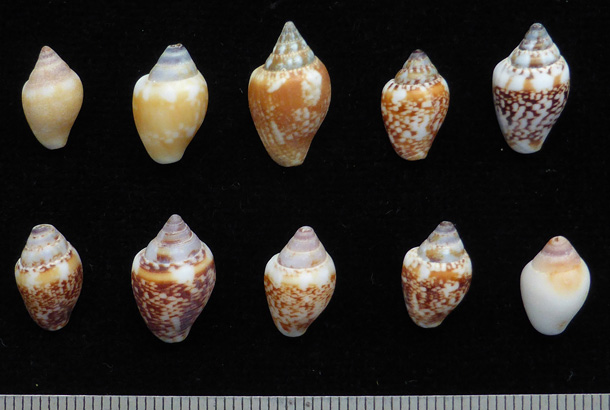
Fig. 2: Range of colours in a sample of Columbella rustica collected on the same beach (Asini 2011).
REFERENCE DATA
Observation data
P0/1. Columbella rustica can be collected in thanatocenoses along beaches, by sight under water, and by touch in waist-deep water
The collections were conducted under three different conditions: in thanatocenoses along beaches, by sight under water and, by touch, in waist-deep water (table 1).
| Year | Recording | Collectors | Time | Nb. of C. rustica | Fragments | ||
| Thanatocenose | |||||||
| Argolide | 2006-1 | Described and measured | na | 65 | 34 | ||
| Argolide | 2006-5 | Described and measured | Na | 20 | 0 | ||
| Asini | 2007-1 | Described and measured | CP+PP | 41 | |||
| Asini | 2007-3 | Described and measured | CP + PP | 35' | 18 | ||
| Asini | 2008 | Described and measured | CP + JB | 58 | |||
| Asini | 2011-2 | Described and measured | CP + PP+ SB | 1h 10 | 248 | ||
| Fourni | 2006 | Described and measured | MV+CP+BW | 71 | |||
| Franchthi | 2007-1 | Described and measured | CP | 12 | |||
| Kastraki | 2011-1 | Described and measured | CP + PP + SB | 1h 30 | 216 | 59 | |
| Kastratki 2012 | Described and measured | CP + SB | 40’ | 51 | |||
| Arvenitsa | 2006 | Described and measured | BW (+AC) | 114 | |||
| total | 914 | ||||||
| Thanatocenose | |||||||
| Asini | 2007-2 | Counts by broad categories | 1h 15' | 123 | |||
| Asini | 2009-1 | Counts by broad categories | 22 | ||||
| Asini | 2009-2 | Counts by broad categories | 81 | ||||
| total | 226 | ||||||
| Under water, by sight | |||||||
| Asini and Arvenitsa | 2009 | Described and measured | CP + SM | 74 | 0 | ||
| Arvenitsa | 2011-1 | Described and measured | CP | 45' | 90 | 0 | |
| Andros | 2011 | Described and measured | CP | 16 | 0 | ||
| Arvenitsa | 2012-4 | Described and measured | CP | 45’ | 92 | 0 | |
| total | 272 | ||||||
| Under water, by touch | |||||||
| Arvenitsa nest | 2012-1 | Described and measured | CP | 5' | 22 | ||
| Arvenitsa | 2012-2 | Described and measured | CP | 45' | 92 | ||
| total | 114 | ||||||
| Underwater, mixed (pred. by touch) | |||||||
| Arvenitsa | 2012-3 | Described and measured | CP | 1h | 203 | ||
[+]Collecting in thanatocenoses along beaches
Columbella rustica was collected on various beaches of the Argolid (Greece) constituted of sand and/or gravels, in the accumulations of shells brought by the waves (thanatocenoses). We found it on every beach where rocks were present below the surface of the water and did repeated collections on Asini beach, Kastraki and Arvenitsa near Nafplion, on Fourni beach near the Franchthi Cave and on the present-day Franchthi beach itself. To the contrary, no dove shell was found on the shallow sandy beach of Karathona, near Nafplion. Contrary to other collectors (e.g. Cartonnet 1991, Pauc and Pauc 2006), we did not collect solely specimens visible on the surface, but searched through the sand or gravels. During some collections all Columbella and fragments were recovered, so as to document the full range of natural sizes and alterations (Asini 2006, Asini 2007-2, Kastraki 2011). In other cases we specifically searched well-preserved, large specimens that could be used to make beads (Asini 2009, 2011).
[+]Collecting by sight under water
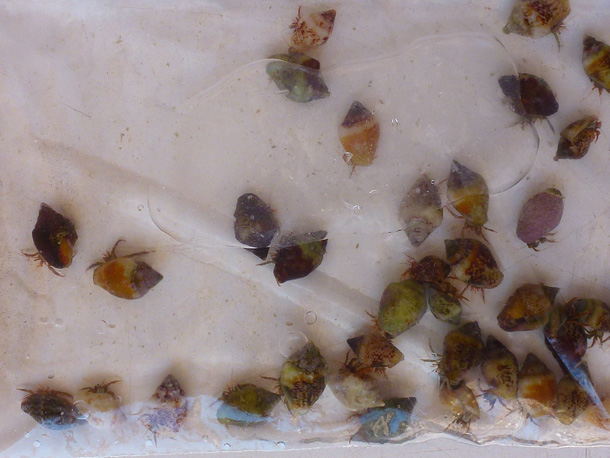
Other samples were collected under water, by sight, with a mask, at depths between 0, 20 and 0,50cm. Under water Columbella rustica is often covered by concretions and micro-algae, and it took us some time to realize they had to be spotted by their shape and not by their colors. Although some live specimens were recovered in these collections, most were in fact dead specimens inhabited by hermit-crabs (Fig.3).
Fig. 3: Columbella rustica collected under water by sight, and inhabited by hermit-crabs (near Arvenitsa beach, 2011).
[+]Collecting by touch in waist-deep water
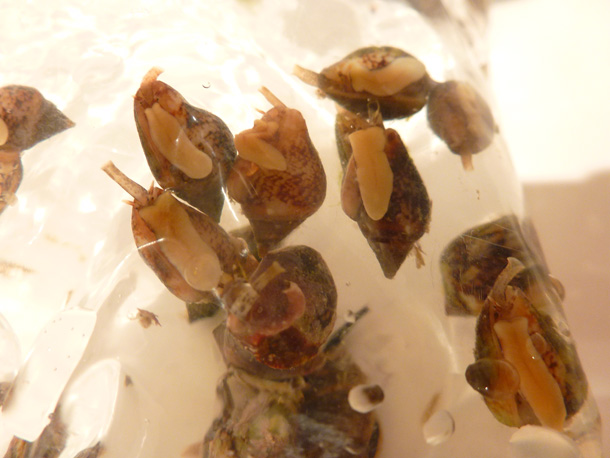
We only discovered how to systematically find live Columbella rustica around Arvenista beach (Nafplion), several years after our first collections. Columbella rustica lives — possibly during the season of reproduction— in small “nests” of 5 to more than 20 individuals (Figs. 4, 5) made of small holes in the rock, the size of a nutshell. They are usually completely hidden by the surrounding (short) algae. Even when knowing this, they cannot be spotted by sight, and can only be discovered by poking the rocks with a finger. Many such nests were discovered very near the surface, on rock flats at depths of sometimes less than 20 cm, making the use of a mask unnecessary. Interestingly, one or two live Pisania striata were sometimes found together with Columbella rustica. Like the dove shells inhabited by hermit-crabs, many Columbella found alive were partially or completely covered by concretions (Fig. 4). At Kastraki, near Tolo, the situation was slightly different since the rocks close to the beach were mostly bare of algae. The dove shells were found grouped again, usually in small crevices, easier to spot by sight but well protected by sea-urchins.
Fig. 4: Live Columbella rustica found in a single nest on rocks near Arvenitsa beach (Nafplion), together with two Pisania striata (bottom right).
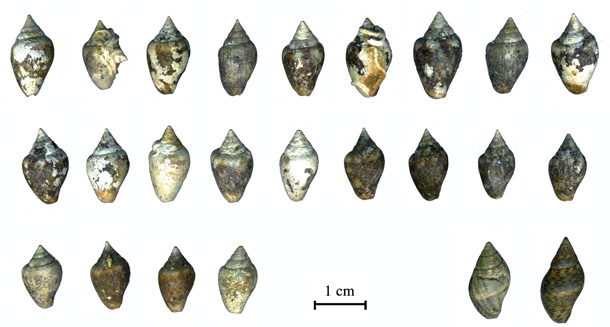
Fig. 5: Live Columbella rustica collected under water by touch, near Arvenitsa beach, 2012.
P0/2. The dimensions of Columbella rustica vary depending on the places of collect
The modality and location of collect is an important factor which determines the mean size of the specimens collected and the ratio of specimens usable as beads. Size differences depending on the location of collection had previously been exemplified for live Patella vulgata (Bailey and Craighead 2003), but not, to our knowledge, for Columbella rustica.
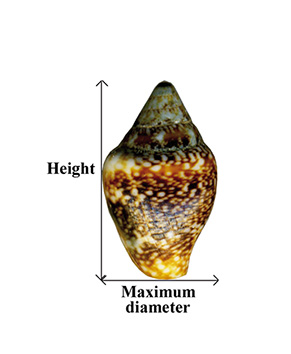
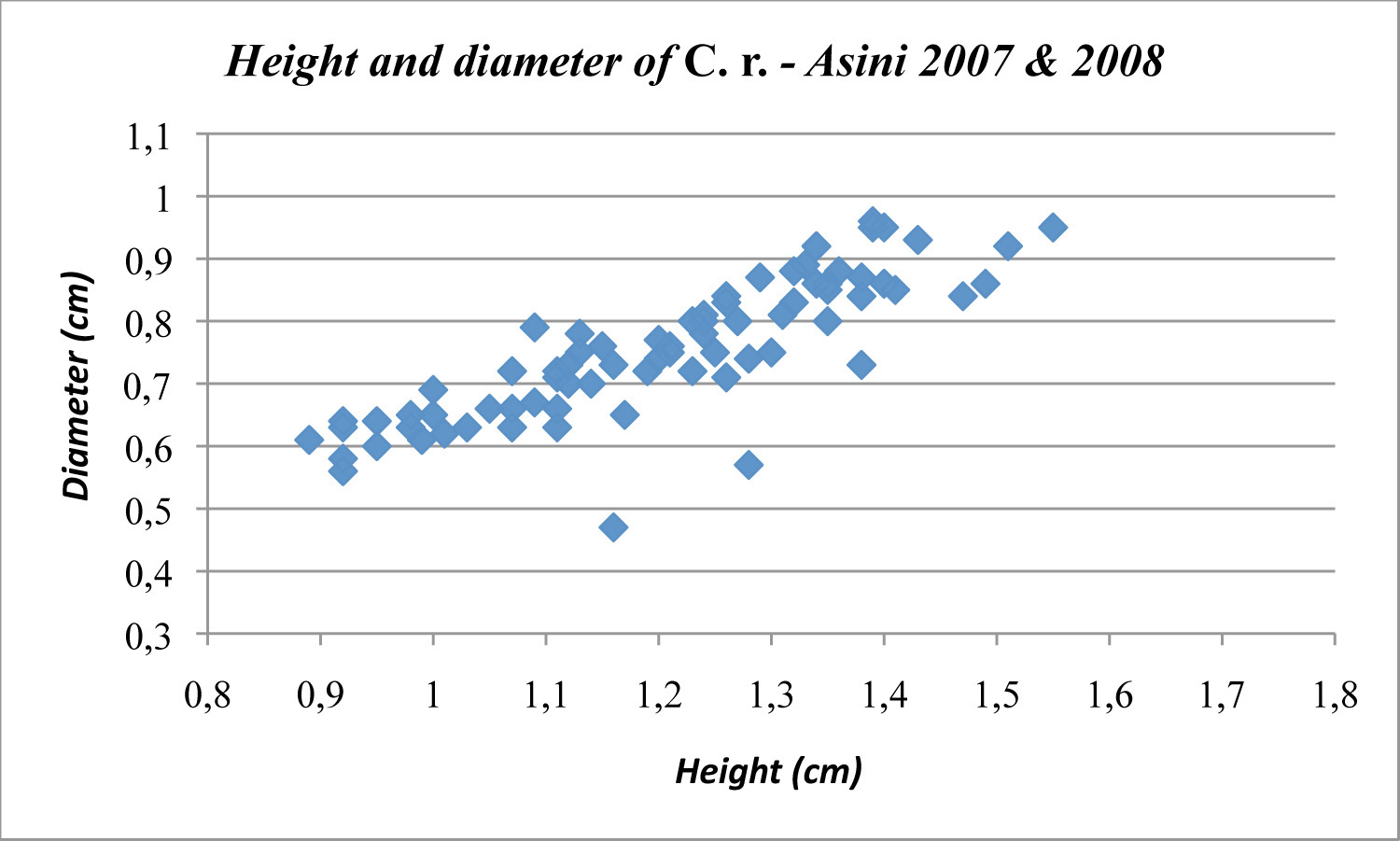
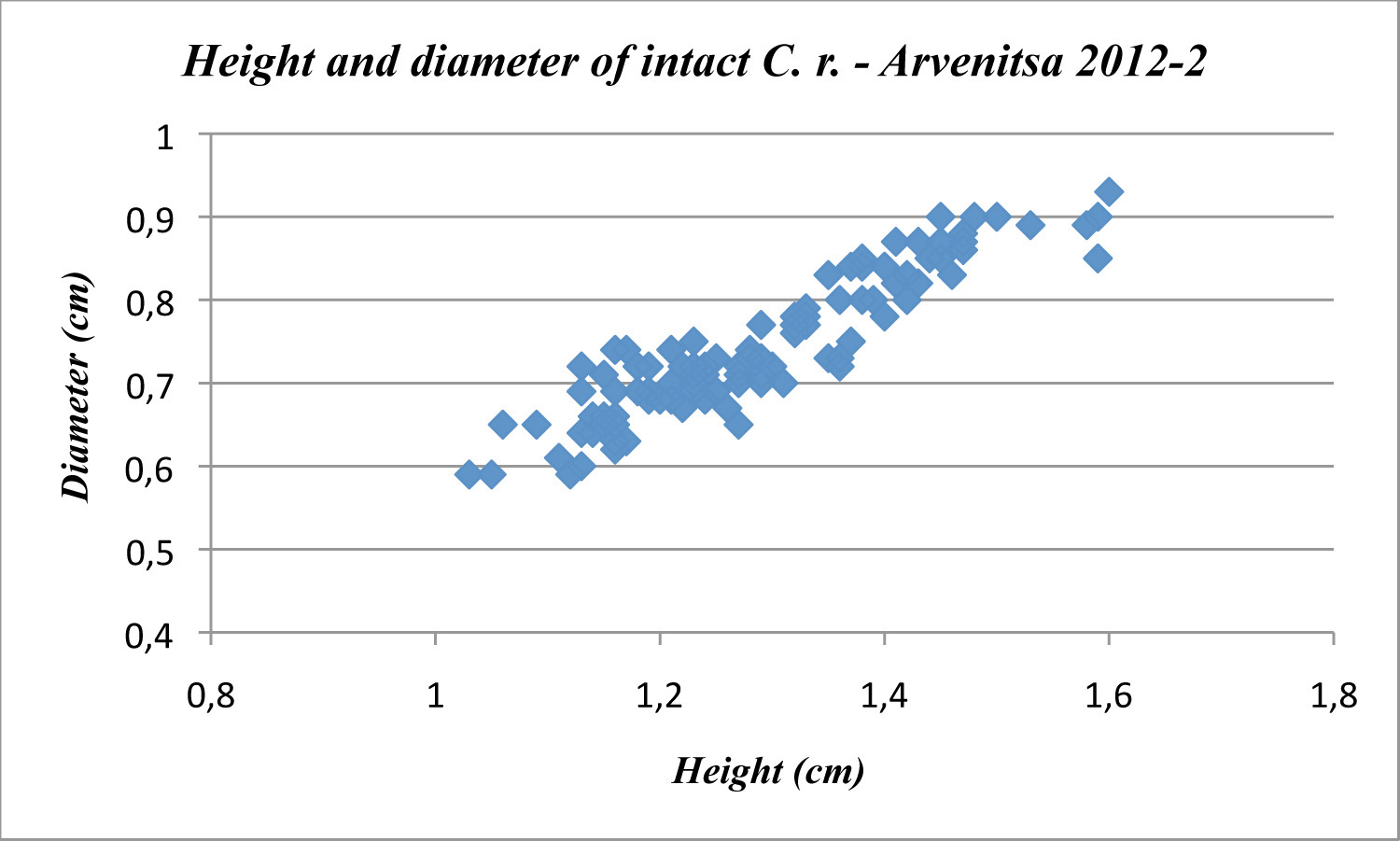
The correlation between the height and maximum diameter of the shell is very high (Pearson’s R comprised between 0,83 and 0,93 depending on the assemblage, p< 0.01) and reaches similar values whether the samples are collected on beaches or underwater (table 2, figs 6 and 7). The height is thus sufficient to characterize the size distribution of the reference collections and compare them to the archaeological ones.
Fig. 6: Measurements on Columbella rustica.
| Location of collect | Year | Pearson’r | n | Type of collect |
| Arvenitsa | 2006 | 0,88 (p < 0.01) | 72 | Thanatocenose |
| Arvenitsa | 2012-4 | 0,83 (p < 0.01) | 80 | Underwater collect by sight |
| Arvenitsa and Asini | 2009 | 0,89 (p < 0.01) | 74 | Underwater collectby sight |
| Arvenitsa | 2012-1 and 2012-2 | 0,91 (p < 0.01) | 112 | Underwater collect by touch |
| Asini | 2007-2008 | 0,83 (p < 0.01) | 80 | Thanatocenose |
| Argolide | 2006-1 | 0,93 (p < 0.01) | 67 | Thanatocenose |
| Fourni | 2006 | 0,89 (p < 0.01) | 81 | Thanatocenose |
Fig. 7 : Correlation between height and maximum diameter of intact Columbella rustica from thanatocenoses and underwater collects.
[+]Height distribution on beach samples (thanatocenoses)
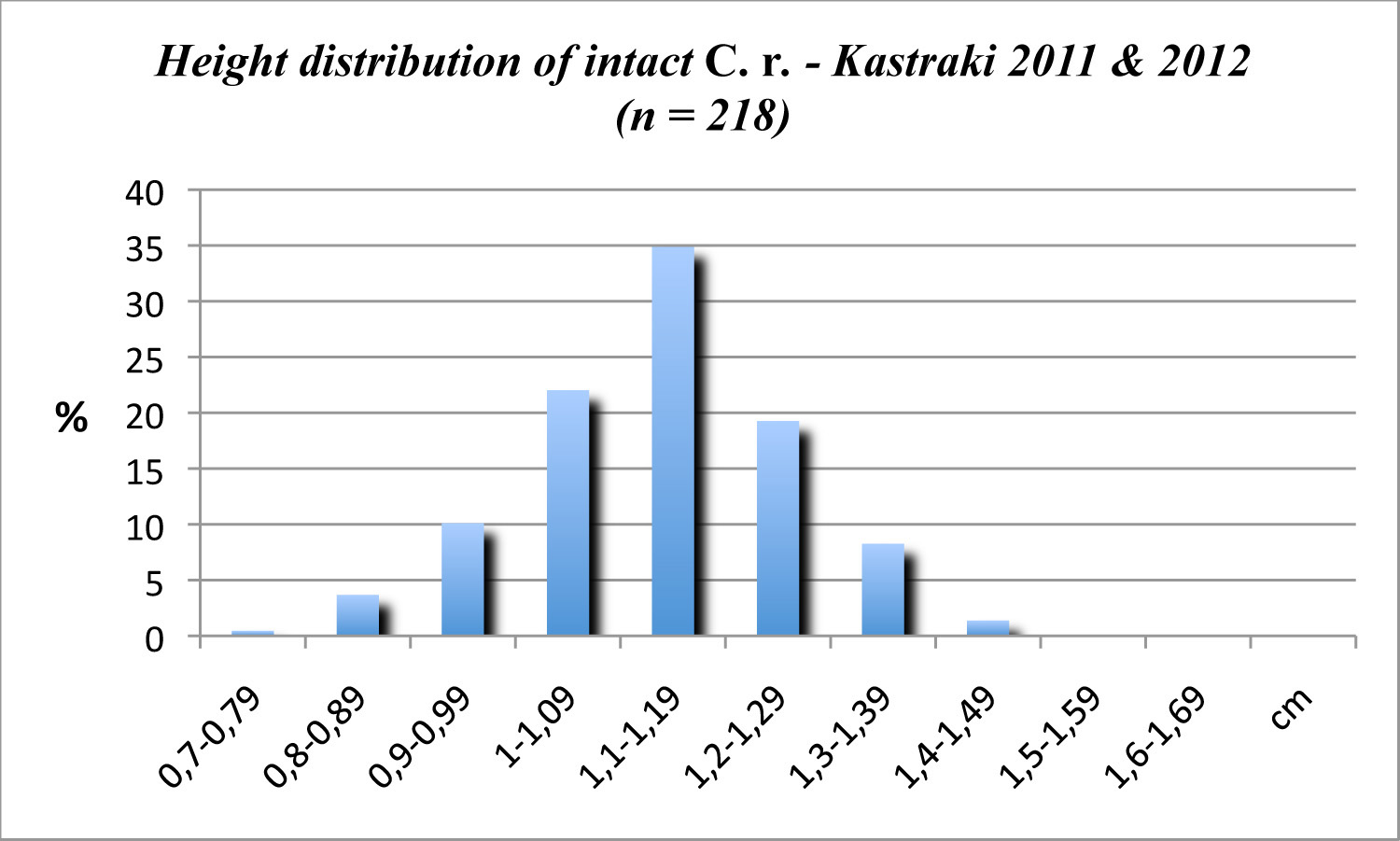
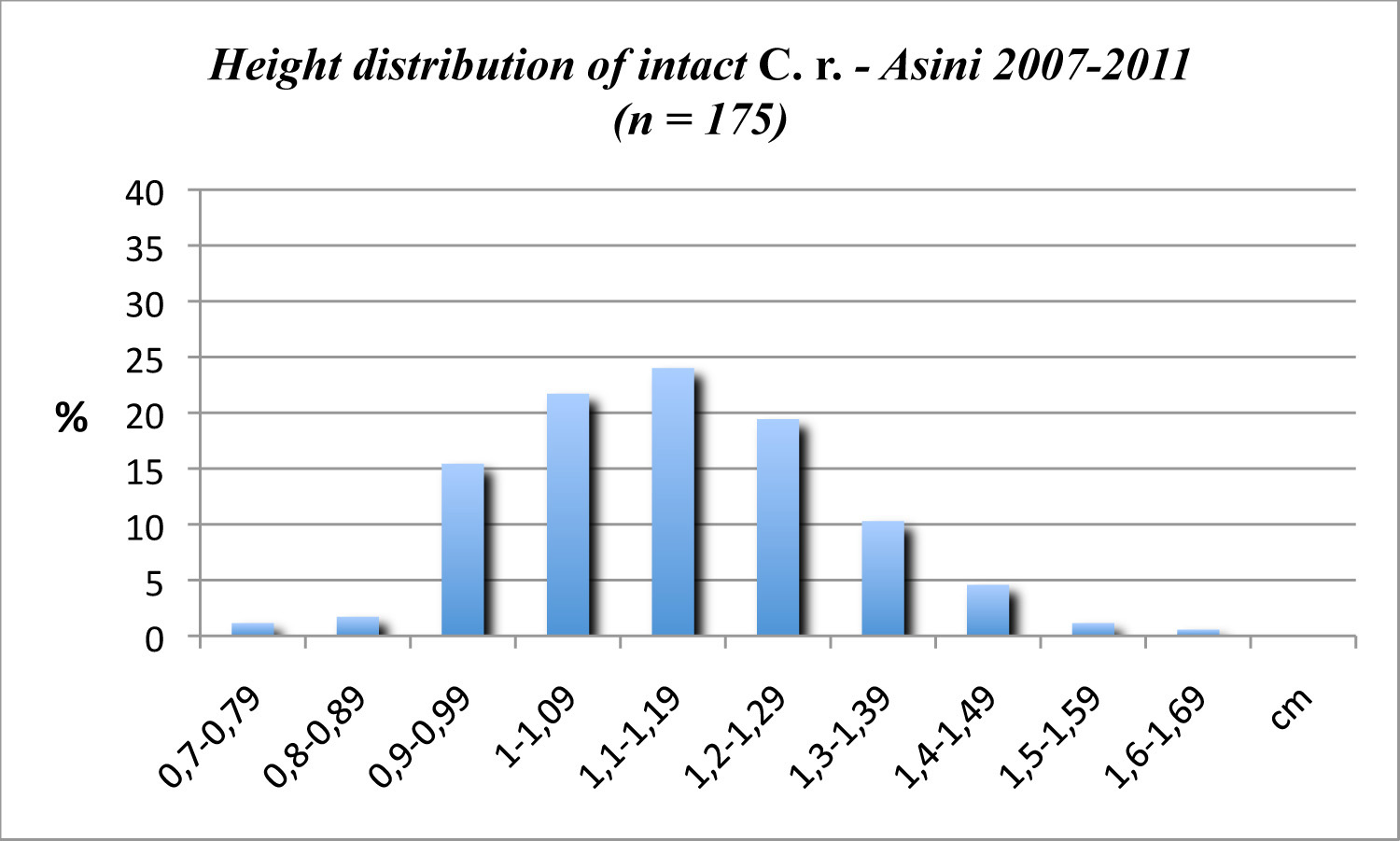
On large beach samples (thanatocenoses) from Kastraki (2011-2012), Fourni 2006 or Asini (2007-2011), the distribution of the height of the Columbella rustica is fairly gaussian, with a mode between 1,1 and 1,19 cm and a mean of 1,14 for Kastraki (σ = 0,12 ), 1,14 also at Asini (σ =0,16) and 1,17 for Fourni (σ = 0,18). However, the smallest categories are poorly represented in these last two series (Fig. 8), probably because the collection was less systematic than at Kastraki. These values are much lower than the values obtained by Komsó and Vukasavljević (2011) for a sample of 104 specimens collected in the eastern Adriatic (mean height: 1,45 cm). Unfortunately, we found no data on the factors influencing the growth-rate of dove shells but the difference may be due to the cooler temperature of the Adriatic.
Fig. 8: Height distribution of intact Columbella rustica from thanatocenoses.
[+]Height distribution in under water samples
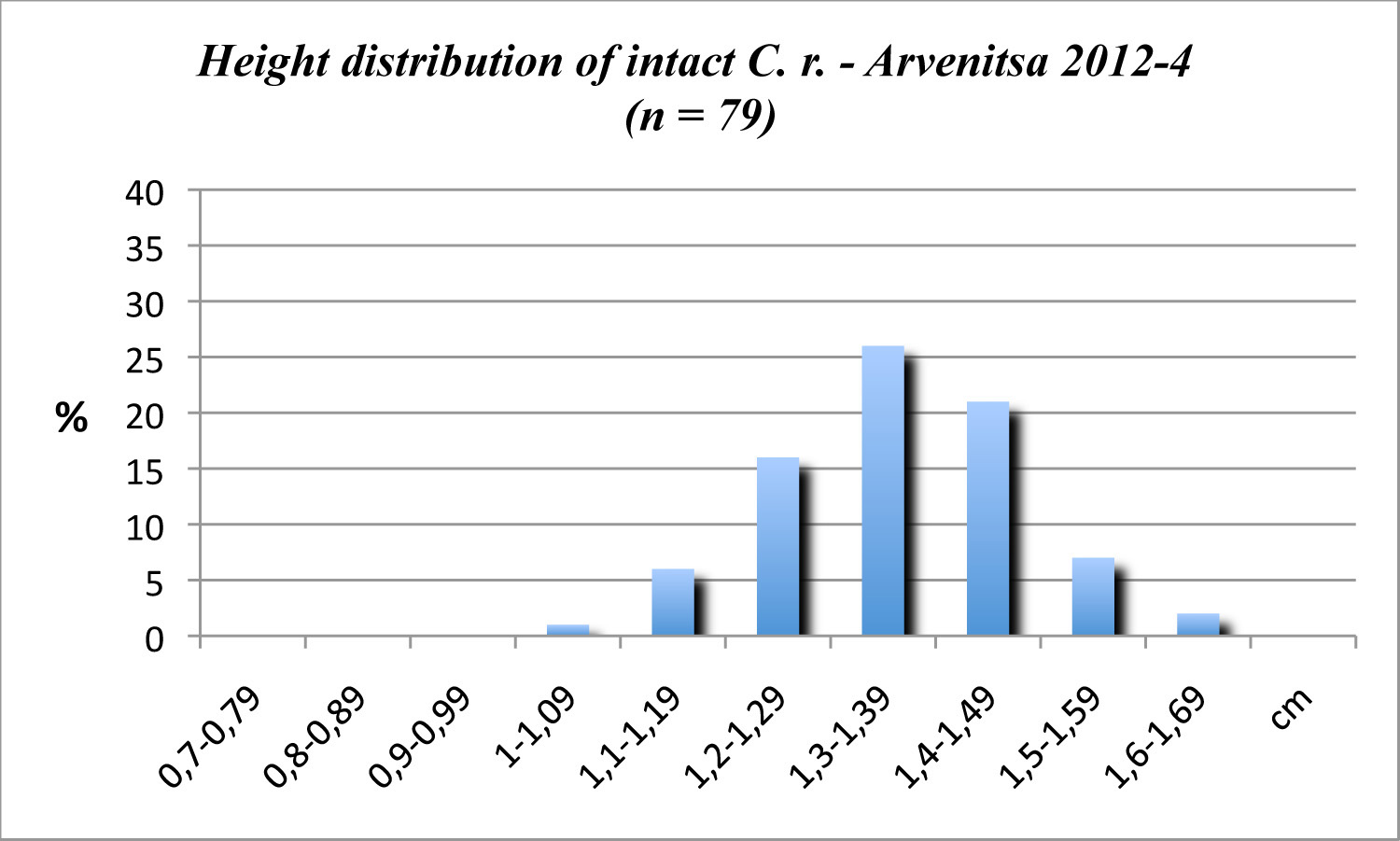
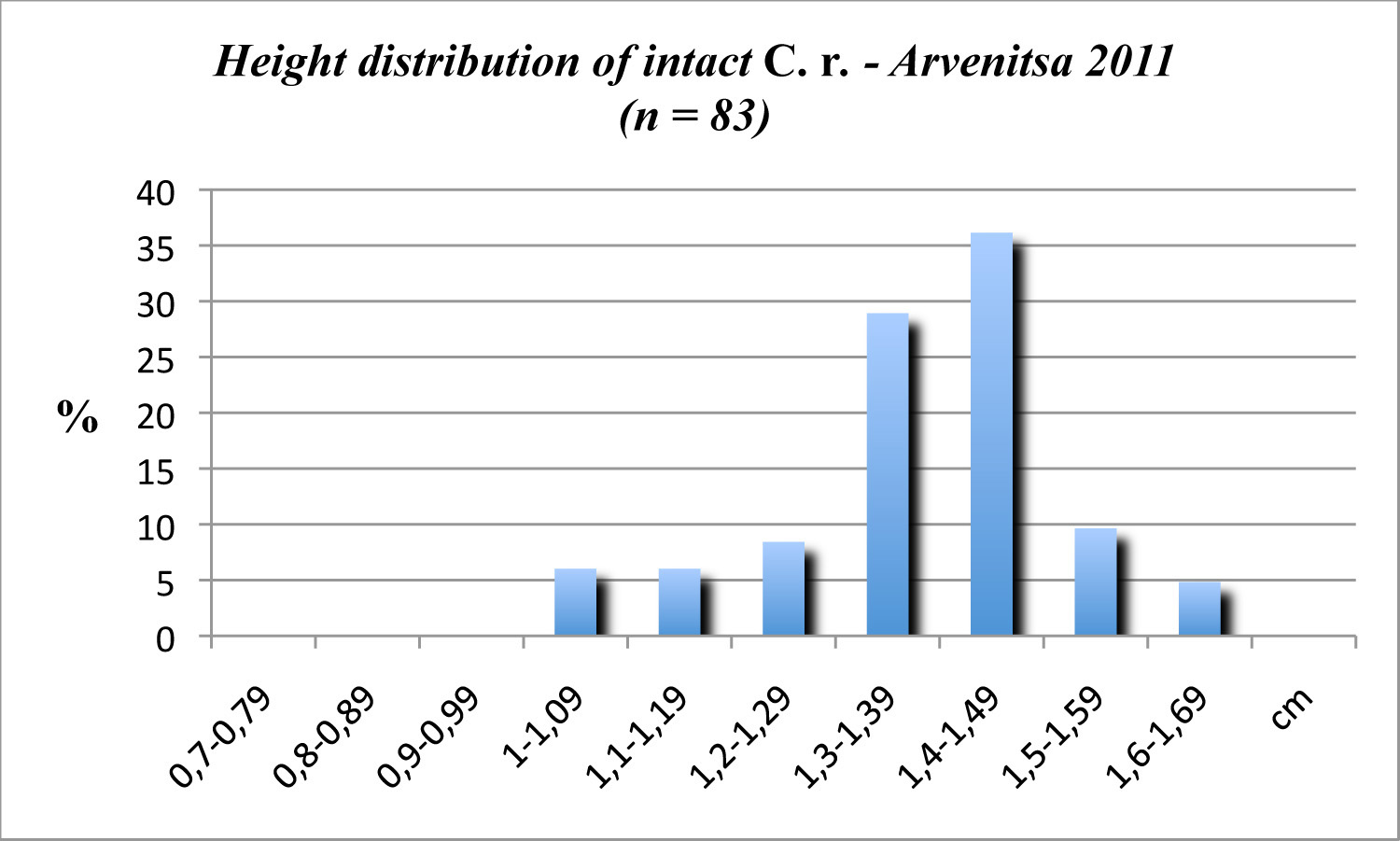
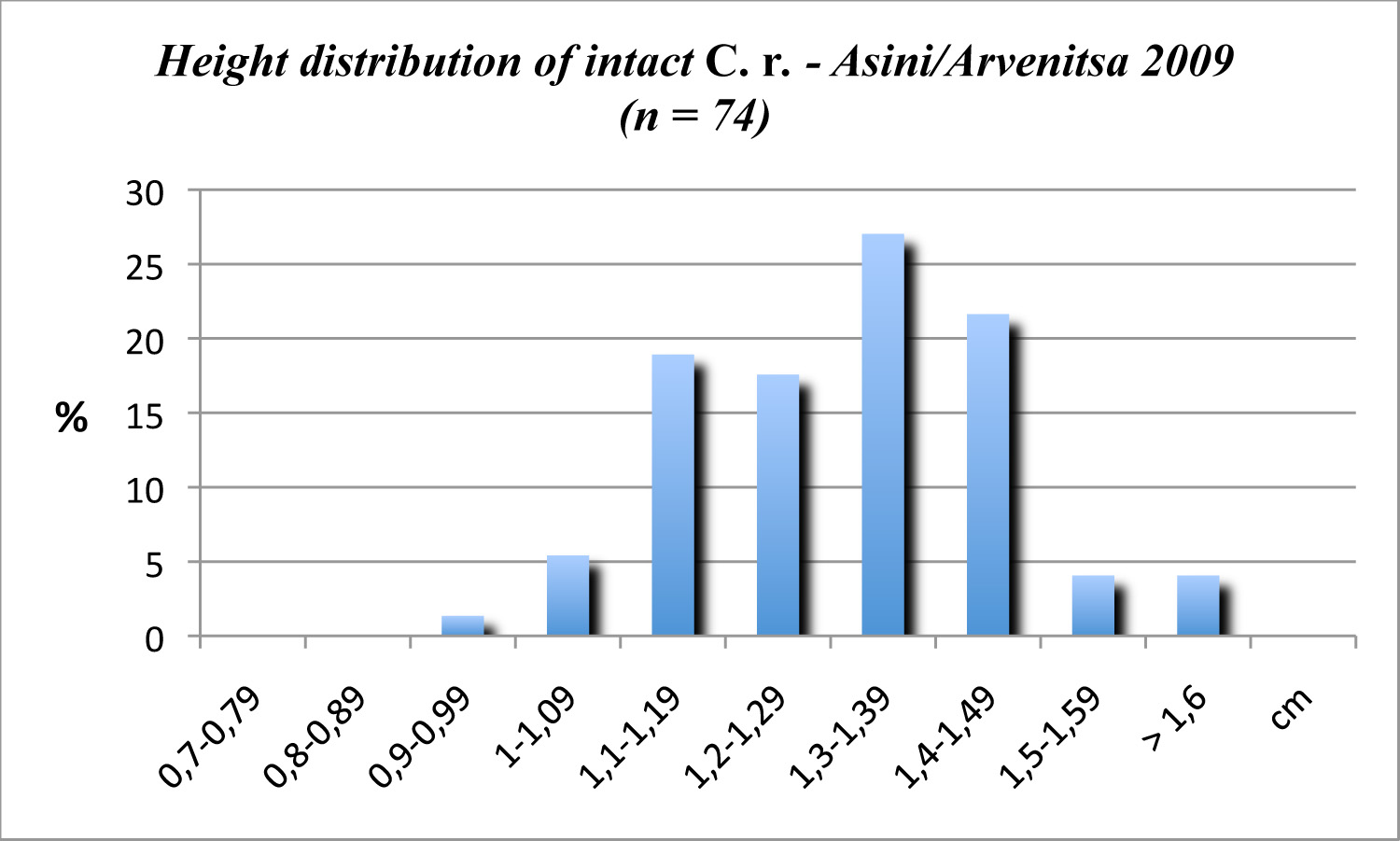
Samples collected by sight under water show a markedly different distribution (Fig. 9), with a smaller range and a much higher mode: 1,3 to 1,6cm (mean 1,35; σ = 0,11; n = 79 for Arvenitsa 2012-4; mean 1,37; σ = 0,13; n = 83 for Arvenitsa 2011). This highly significant difference (all Student tests significant at p < 0.05) is certainly due in part to the conditions of visibility under-water, but also, or possibly even more, to the fact that most shells were inhabited by hermit-crabs that tend to select the largest available ones (http://en.wikipedia.org/wiki/Hermit_crab). However, at least in 2006 and 2007, local ladies were collecting Columbella rustica for the touristic shop industry on Arvenitsa. This may have biased the distribution for this beach, although it probably did not affect the later collections and did not affect the other beaches.
Fig. 9: Height distribution of intact Columbella rustica from underwater collects by sight.
[+]Height distribution in underwater 'nests'
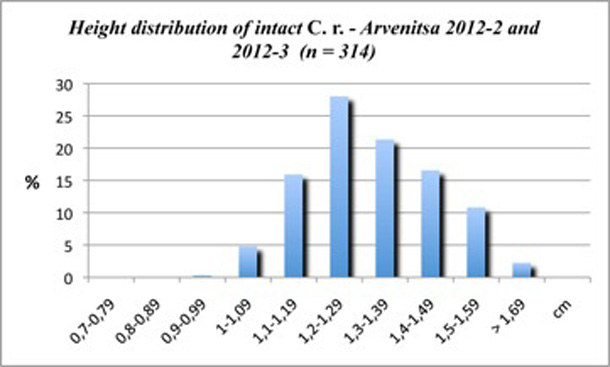
Finally, the samples collected live in underwater ‘nests’ show an intermediate distribution and intermediate values between the thanacenose sample and the underwater sample collected by sight (Fig. 10). We have grouped here the samples exclusively collected in nests (Arvenitsa 2012-1 and 2012-2) with the 'mixed' collect Arvenitsa 2012-3 since the latter was done predominantly by touch and a Student’s test showed no significant difference between the two series (t = 0,0088). Here again, the smaller heights are poorly represented, although we systematically collected all the specimens in a given nest. Despite this bias, we may consider that the mode, between 1,2 and 1,3cm and the mean (1,31; σ = 0,15; n = 313) represent the actual mode and mean of live present-day populations around Arvenitsa beach. This indicates that the smaller specimens tend to be over-represented in thanatocenoses while, to the contrary, large specimens are over-represented in samples inhabited by hermit-crabs.
Fig. 10: Height distribution of intact Columbella rustica collected underwater by touch and from a mixed collect predominantly by touch.
P0/3. The state of preservation varies widely according to the mode of collection (live or dead) and according to the beach
The state of preservation in reference collections is an important variable to assess the proportion of specimens in a good enough state to be perforated and the proportion of naturally holed shells that could be used directly as beads. To document the state of preservation, we have followed, with some modifications, Cartonnet’s classification (Cartonnet 1991).
Fig. 11: From left to right: intact Columbella rustica (class 1), spires broken on the 1rst, 2nd and 3rd whorl (class 2) and, right, broken on the 4th whorl (class 3).
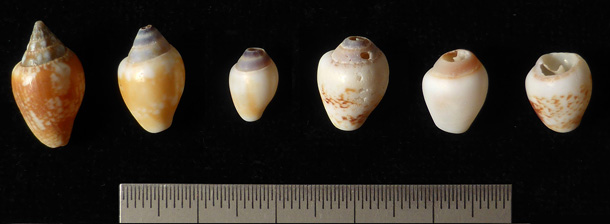
Fig. 12: Broken Columbella rustica (class 4) and fragments.

- Class 1 corresponds to complete specimens, from the base to the apex. A slight deterioration of the apex is admitted, provided it does not create a hole.
- Class 2 corresponds to specimens that have lost one to three whorls on the spire, without reaching the last whorl.
- Class 3 corresponds to specimens that have lost all whorls but the last one, with a break at the level of the last suture.
- Class 4 corresponds to fragments unusable as ornaments.
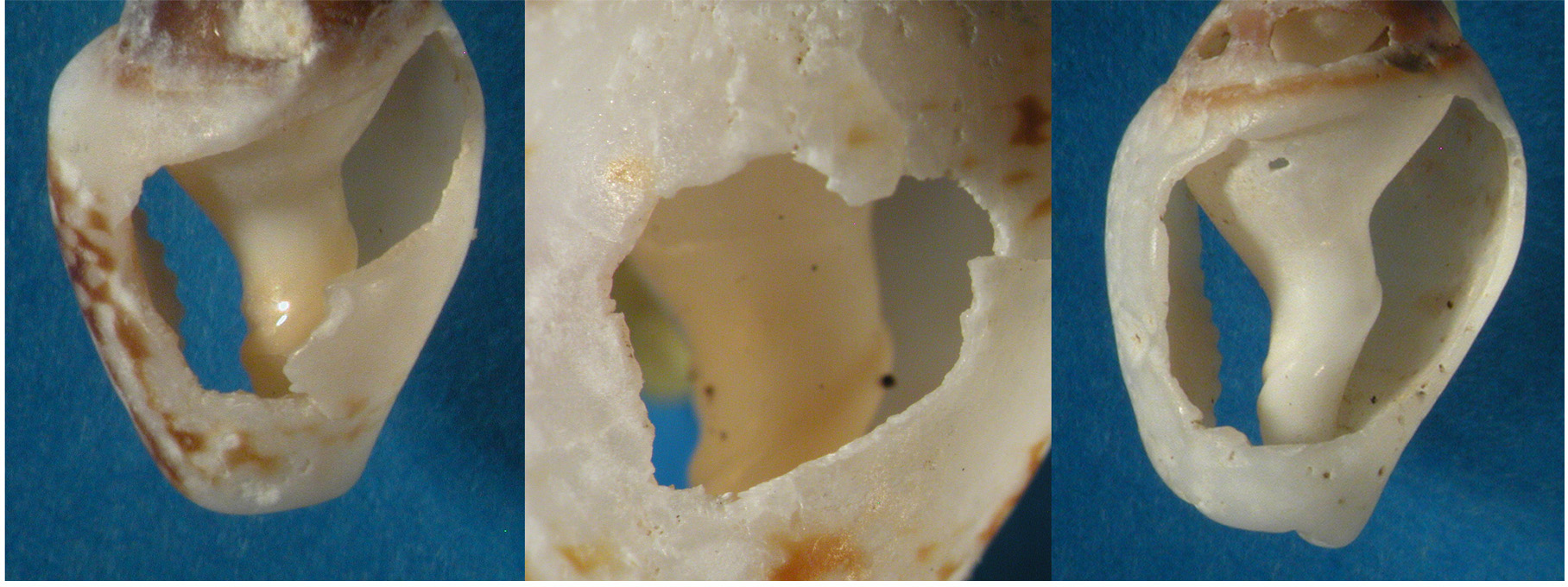
Several other alterations can affect each class: large and small holes, broken lips or bases. We found few if any reference to the factors causing these deterioration. Cartonnet (1991) mentions the attack of predatory Muricidae on the last whorl as well as abrasion by the sand and shocks on rocks. Given the lack of precise criteria for diagnoses, we did not try to assign each perforation to a specific predator or to the mechanical actions of the waves and the sand. However, we distinguished the smaller holes (1 to 2 mm in diameter), probably mostly due to predators and smaller than the perforations found on archaeological specimens, and the larger holes, compatible with a direct use as beads and in large part certainly due to a violent shock on a rock. The position of the hole was noted for each specimen. We also recorded the cases when the lip was broken or missing. It seems that on the smallest specimens the lip was not formed and closed. These might be juveniles, but we did not find a confirmation. The various alterations that affect the shells lead to distinguish several subclasses within each class.
Thus, class 1a large includes complete specimens with a large enough hole to be used as bead (though the position of the hole is not always compatible with this use), class 1a small includes specimens with a holes smaller than archaeological ones, class 1bl specimens with a broken or missing lip, and class 1 bb the rare specimens with a broken base. The same subdivisions apply to the other classes. Fragments (class 4) are not included in the counts since they were not systematically collected.
As shown in Table 3, the state of preservation varies widely according to the mode of collect (live or dead) and according to the beach itself for thanatocenoses. Broken or perforated specimens are extremely rare in underwater samples, when they can be frequent in thanatocenoses. On the other hand, many specimens collected underwater are covered by micro-organisms and concretions (Fig. 4). Even when this is not the case, the presence of the periostrum, the organic outer layer of the shell, renders them much duller than beach-worn specimens. Dove shells found in thanathocenoses have been washed up on the beach after having been rolled by the waves. This abrasive process removes the concretions and micro-algae found on under-water specimens, and reveals their lustrous coloured outer surface. Within the thanatocenoses, the shells are better preserved on the sandy beach of Fourni than on Asini, where a range of low rocks separates the open water from the beach itself. The proportion of perforated specimens is also variable, but always low in our samples. It is lower than in the sample collected on the beach below Üçağızlı I Cave in Turquey (Stiner et al. 2013: 384), where they reach 20%, and than in the sample collected by Cartonnet in southern France (Cartonnet 1991), where it reached 45 %. When one only considers the specimens with a large dorsal perforation, as found on archaeological shell beads, it barely reaches 4 to 6% in our collections (10% at Üçağızlı I).
| Class | 1 | 2 | 3 | |||||||||||
| Sub-class | 1 | 1a | 1a | 1 bl | 1bb | 2 | 2a | 2a | 2 bl | 3 | 3a | 3a | 3 bl | Total |
| large | small | large | small | large | small | |||||||||
| Thatanocenoses | ||||||||||||||
| Asini 2009 | 53,2 | 8,5 | 3,9 | 0,6 | 13,1 | 2,6 | 9,2 | 0,6 | 152 | |||||
| Asini 2011-a | 40,9 | 1,2 | 0,8 | 4,5 | 38,1 | 2,4 | 1,6 | 0,8 | 8,1 | 0,8 | 0,4 | 244 | ||
| Fourni 2006 | 61,4 | 5,7 | 4,2 | 15,7 | 2,8 | 5,7 | 1,4 | 1,4 | 70 | |||||
| Kastraki 2011 and 2012 | 52,4 | 4,8 | 2 | 6 | 20 | 2,8 | 2 | 1,6 | 3,6 | 3,2 | 0,4 | 0,4 | 250 | |
| Underwater collects | ||||||||||||||
| Arvenitsa 2011 | 96,7 | 2,1 | 1,1 | 91 | ||||||||||
| Arvenitsa 2012-2 | 99,1 | 0,9 | 112 | |||||||||||
| Arvenitsa 2012-4 | 91,3 | 1,1 | 1,1 | 5,4 | 1,1 | 92 | ||||||||
| Arvenista 2012-3 | 97,5 | 0,4 | 0,4 | 1,4 | 202 | |||||||||
Fig. 13: Small (top two left) and large dorsal, lateral and ventral perforations on Columbella rustica collected on Kastraki beach (2012).
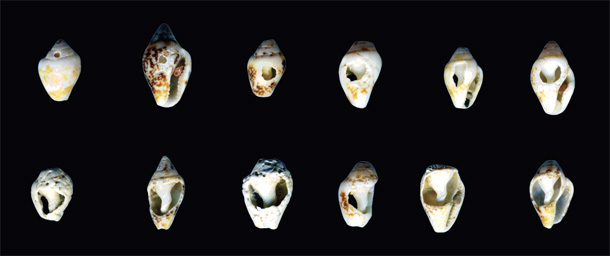
Fig. 14: Details of natural perforations (Asini 2006). © M. Vanhaeren.
P0/4. The rates of collecting vary depending on the mode of collect and the beach
The rates of collecting in thanathocenoses were highly variable. On the same beach (Asini), it ranged from 11 to 80 shells per hour and per collector, fragments excluded (Table 4). This variation is independent of the aim of the collection: intact specimens only or all specimens. We did not systematically record individual variations between collectors, but is it clear that one of us (S. B.) was much more efficient than all others. Collecting by sight under water, and especially by poking for dove shell nests, is even more productive, reaching 200 specimens per hour and collector, all intact.
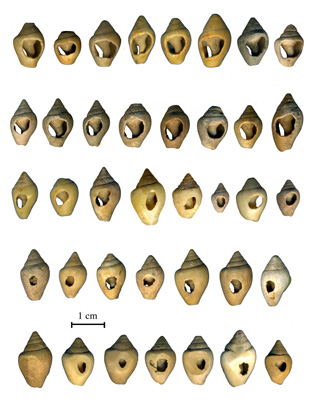
However, these relatively high figures do not mean it is easy to find Columbella rustica appropriate for bead making: many are either too small or broken when collected from thanatocenoses, or covered with concretions when collected in the sea. In all archaeological periods at Franchthi (Upper Palaeolithic, Lower Mesolithic, Upper Mesolithic, Final Mesolithic and Neolithic) 75% or more of the Columbella have a height ≥ 1,2 cm (Fig. 15). This figure can thus be considered the basic minimal standard for shells to be used as beads. It corresponds well to our empirical standards for perforating the shells by direct or indirect percussion without hitting our fingers rather than the shell. The mean height of the small Upper Palaeolithic sample of perforated dove shells actually reaches 1.42 cm (σ = 0,11, n = 10), while the larger Mesolithic sample has a mean of 1,34 cm (σ = 0.15, n = 58). Collecting from thanatocenoses on beaches by searching through the sand or gravels produced only 4 to 12 Columbella rustica of a height ≥ 1,2 cm per hour and per collector (Table 4).
| Collect | Collectors | Time | Nb. of complete specimens | Nb. of specimens ≥ 1,2 cm | % of specimens ≥ 1,2 cm | Nb. of specimens ≥ 1,2 cm per hour and per collector |
| Thanatocenoses | ||||||
| Asini 2011-2 | CP + PP + SB | 1h10 | 248 | 27 | 15,7 | 7 |
| Kastraki 2011-1 | CP + PP + SB | 1h 30 | 216 | 56 | 29,7 | 12 |
| Kastraki 2012 | CP + SB | 40' | 51 | 7 | 13,7 | 4 |
| Asini 2007-2 | CP + MV + PP | 1h 15' | 123 | 25 | 21,1 | 6 |
| Underwater collects | ||||||
| Arvenitsa 2011-1 | CP | 45' | 90 | 73 | 87,9 | 97 |
| Arvenistsa 2012-4 | CP | 45' | 92 | 72 | 91,1 | 96 |
| Arvenitsa 2012-2 | CP | 45' | 92 | 84 | 72,3 | 112 |
| Arvenitsa | CP | 1h | 203 | 164 | 82,6 | 164 |
Results
P1/1. Variation in the size distribution of Columbella rustica in archaeological samples may indicate changes in collection strategies
Seasonal variations in the size distribution of gastropods are often attributed to differences in environmental conditions or to the intensity of human exploitation (e.g. Álvarez-Fernández et al. 2011; Bailey and Craighead 2003; Guttiérez-Zugasti 2011). Our data show that, at least for Columbella rustica, the mode of collection is another potential factor of variation. Since the different modes of collection each induce specific constraints and advantages, various collection strategies may have been implemented according, in particular, to time constraints and aesthetic preferences.
P1/2. Collecting Columbella rustica on beaches (thanatocenoses) for beads, compatible to the dimensions of archaeological specimens, is time-consuming
The majority of archaeological specimens display the characteristic alterations of shells collected in thanatocenoses: pitting, rounding, breakage of the spire. However, while it is easy to collect dozens of Columbella rustica on a beach, finding specimens sufficiently well-preserved and large enough to be used as beads is time consuming on present-day Argolid beaches.
P1/3. On beaches, dove shells with a natural dorsal perforation are too rare to be the sole source of prehistoric beads.
Furthermore, we have seen that less than 10% of the shells collected on beaches were naturally perforated. Fewer still bore a dorsal perforation that allowed a direct use as bead. As an instance, on Asini beach (2009) we collected 6 Columbella rustica with a dorsal perforation comparable to the Palaeolithic and Mesolithic ones, over a total of 152. Consequently, we cannot concur with Cartonnet (1991: 304) in considering that the prehistoric bead-makers could rely only on naturally perforated specimens. In large assemblages such as found at Franchthi, the majority of the Columbella rustica beads were intentionally perforated.
P1/4. Collecting Columbella rustica underwater is efficient in terms of number and size of specimens, but provides duller shells
Given the much larger mean height of the shells collected underwater, the rate of collection of large specimens is much higher and can reach more than 150 usable shells per hour. However, at least a third is heavily covered with concretions. Even when the concretions are more superficial and the periostrum is scraped off, they remain much less shiny than shells collected in thanatocenoses.
P2/1. Collecting Columbella rustica for beads is the result of choices between quality and efficiency
In sum, collecting underwater, which, in optimal conditions, can be done without swimming, is by far the most efficient method, both by the number of specimens that can be collected per hour and by the proportion of specimens large enough to be transformed into beads. This holds true even when one discards the specimens covered with concretions, but the shells remain on the whole duller than Columbella rustica collected on beaches. When the snails are collected underwater, naturally perforated shells that could be used directly as beads are almost non-existant, and all perforations have to be manufactured. It is difficult to prove however, that this type of collect was practiced in archaeological times, since there are few diagnostic features besides the large mean height and the excellent state of preservation of the apex. At Franchthi, large specimens with intact apex are only abundant in the Neolithic.
It is easier to demonstrate that collecting on beaches, from thanatocenoses, has indeed been practiced: at Franchthi, most Palaeolithic and Mesolithic specimens display the characteristics of beach-worn shells — pitting, broken spire, abrasion. This mode of collection is much less productive, even on beaches that are not systematically combed for Columbella rustica such as Asini or Fourni, and may even be considered as time-consuming when one searches for specimens large enough to meet the size standards of the prehistoric shell beads. On the other hand, the shells are shiny and colourful, and a small proportion can be directly used as beads thanks to natural perforations. During these two periods at least, the preference has been given to the aesthetic quality of the shell rather than to the efficiency of the collection. Though not intrinsically rare, large and well-preserved specimens of dove shells can still be considered as valuable finds.
Fig. 15: Upper Palaeolithic and Mesolithic Columbella rustica (first three rows) from Franchthi Cave, perforated by percussion. Perforated Neolithic Columbella rustica from Franchthi (last two rows), including perforations by abrasion.
Acknowledgements
The study of the Franchthi ornaments and constitution of reference collections was made possible by grants of the INSTAP, which are gratefully acknowledged, and from the Agence Nationale de la Recherche (ANR-06-Blan-0273). I sincerely thank all my collaborators who spent hours searching for shells and scanning them: J. Beck, A. Blin, A. Constantin, P. Pion and M. Vanhaeren. I also want to thank the 4th Ephorate of Prehistoric and Classical Antiquities of the Greek Ministry of Culture, at Nafplion, for providing working facilities.
Photographs and illustrations
Credits for photographs and CAD plates
Unless stated otherwise in the caption, all photographs and plates are by C. Perlès.